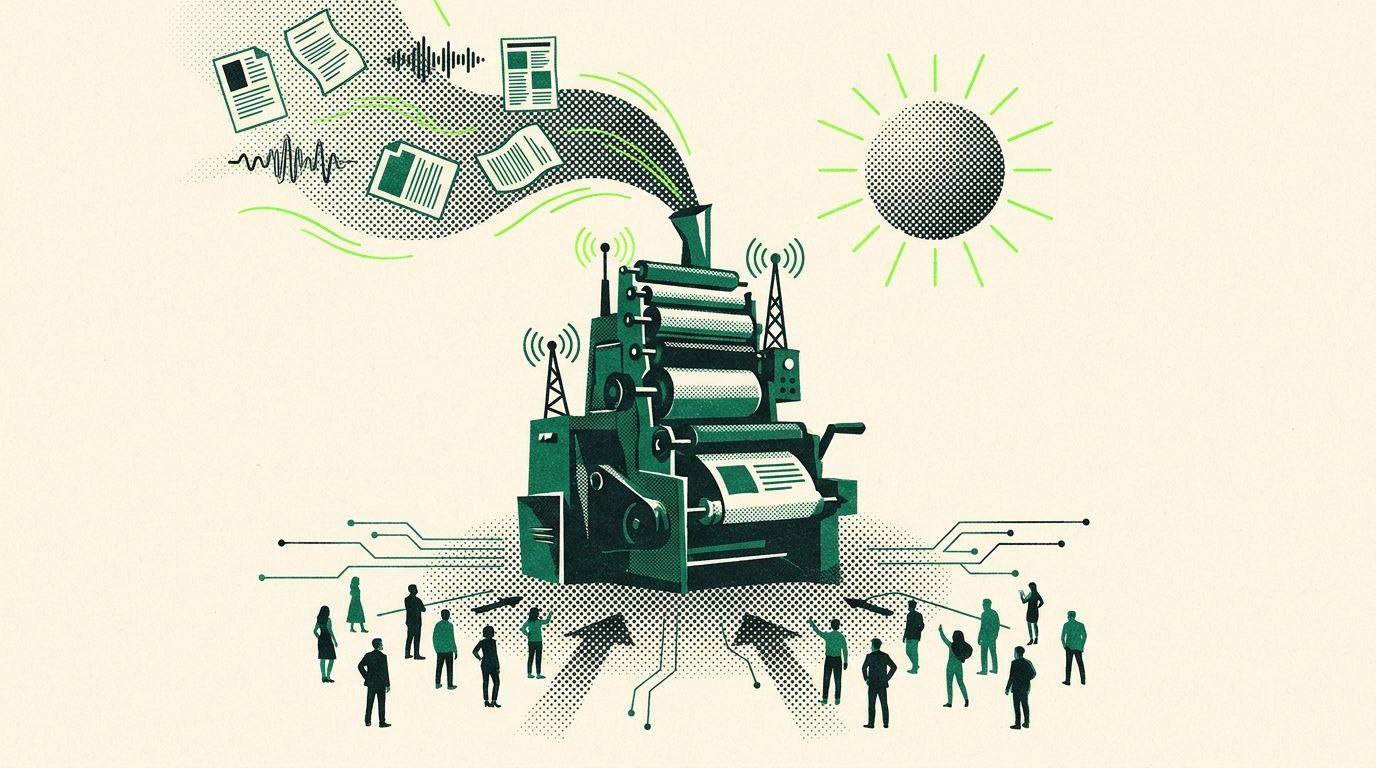
In venture, the customer has the money
Venture capital reverses the normal sales problem.
The investor brings the money, but the exceptional founder is the scarce asset. When several firms want into the same round, the founder decides whose capital, reputation, network, and board seat will sit inside the company for the next decade.
That makes a competitive venture deal look surprisingly like enterprise software. The product is not evaluated in the first meeting. The buyer researches the category, asks trusted peers, watches how the people think, and arrives with a shortlist already formed.
a16z understood this unusually early because it had to. When Marc Andreessen and Ben Horowitz launched the firm in 2009, they were famous operators but did not have the multigenerational venture track record of Sequoia or Kleiner Perkins. Margit Wennmachers, the communications strategist who helped launch the firm and then joined it, later recalled the original challenge plainly: a16z needed to enter the list of the top five firms because the good deals were competitive.
That is the origin of the strategy. The firm did not merely need awareness. It needed preference.
Brand is not the number of founders who know your name. Brand is the number of great founders who already have a reason to choose you when everybody wants the deal.
Media became a way to manufacture that reason at scale. It could demonstrate how the partners thought, which future they wanted to fund, who they could convene, and what help a founder would receive after taking the money.
The media company began before the podcast network
The first great a16z media asset was not a show. It was a thesis with a sentence sharp enough to travel.
In 2011, Marc Andreessen published "Why Software Is Eating the World" in The Wall Street Journal. The line became a category lens, then the firm's identity. It told founders, limited partners, journalists, operators, and future hires what a16z believed before they met anybody from a16z.
This is what strong venture content does. It is not retrospective commentary. It creates a map on which future companies can locate themselves. If a founder believes software will transform a stubborn industry, the firm associated with that belief feels like a natural home.
The firm then made its people visible. Partners wrote essays, appeared in the press, spoke at events, and explained investment theses. The institutional brand and the individual brands reinforced each other. When the podcast started, it already had a worldview to distribute.
By November 2019, a16z published an episode explaining how it produced its 500th podcast episode. Five hundred matters because it reveals the operating choice: this was not a six-episode brand campaign. It was an editorial capability with programming, production, editing, distribution, and a showrunner.
That same week, the preceding episode featured Wennmachers explaining the work behind building ideas and people into a brand. The sequence is almost a blueprint. First define the worldview and the human voices. Then build a repeatable machine that can carry them.
What a16z actually built
Calling it "content" hides the variety of jobs the system performs.
Essays, manifestos, research, and market maps tell founders where a16z believes value will be created.
Podcasts and interviews give the firm a valuable reason to speak with founders, executives, researchers, and policymakers before a transaction exists.
Newsletters, recurring shows, social accounts, and live programs keep the firm present between financing cycles.
Launch support, founder positioning, clips, events, and access to an established audience help backed companies earn distribution.
Events and communities turn one-way reach into relationships among founders, operators, customers, talent, and capital.
Today, the a16z Podcast Network presents a dozen shows across AI, crypto, health, fintech, enterprise, and general technology. Each vertical maps to a market in which the firm invests. The content and the investment organization share an information architecture.

A health founder can enter through Raising Health. A fintech operator can enter through In the Vault. An AI engineer can enter through AI + a16z. A potential enterprise founder can listen to My First 16 and learn how other companies won their earliest customers.
This is audience segmentation, but it is also sourcing segmentation. Every show gives a sector team a recurring reason to research its market, convene its most interesting people, and remain useful to the next generation of founders in that category.
The flywheel looks like this:
How media can improve deal flow
There is no public spreadsheet proving that episode 417 caused investment 812. Deal attribution is rarely that clean, and a16z does not disclose a content-assisted sourcing report.
The honest claim is probabilistic: media increases the number and quality of surfaces on which a great founder can encounter the firm.
It creates discovery before fundraising. A founder may find an essay while researching a market two years before starting a company. When the company exists, a16z is not a cold logo.
It demonstrates judgment. Capital is difficult to evaluate from outside. A library of arguments lets founders inspect how a partner understands technology, risk, people, and markets.
It creates a better first invitation. "Come explain how you solved this problem" is a more valuable opening than "send us your deck." A show can begin a relationship without pretending every guest is an investment target.
It attracts adjacent intelligence. Researchers, executives, customers, policymakers, and later-stage operators also appear. Those relationships improve diligence and give portfolio founders access to people beyond venture.
It pre-sells the operating platform. The output is evidence that a16z can help a founder frame an idea, launch a product, recruit attention, and enter an industry conversation. The media itself demonstrates the service.
This is the venture version of a broader principle we explore in our B2B podcast strategy: the audience is valuable, but the people required to create the show can be equally valuable. Every excellent episode is both a public asset and a private relationship.
The second customer: the portfolio founder
The media strategy would be much thinner if it ended when the term sheet was signed.
a16z was built around the platform model: a large operating team spanning talent, go-to-market, marketing, legal, policy, and other functions. Media sits inside that promise. The firm can give a young company access to production, launch experience, an existing audience, influential relationships, and a network of other founders.
In its 2026 description of global portfolio support, a16z says its new-media team has built relationships with influencers and ecosystem partners who can amplify the perspectives of its founders. A separate retrospective says the team embeds with portfolio companies on projects, helps founders become consistently interesting over time, and accumulates tacit knowledge about how to launch companies.
That is more consequential than putting a founder on the house podcast once.
The firm learns which hooks travel, which formats fit a technical founder, how a launch behaves on X or YouTube, which voices can translate a category, and how to connect a portfolio idea to a larger cultural argument. Then it applies that learning across hundreds of companies.
The portfolio generates the expertise. The media team packages and distributes it. The audience creates feedback. The next launch benefits from the previous one. That is a real shared service, and it is one a founder can consider when choosing between otherwise similar checks.
Future failed; the capability survived
A useful teardown should include the expensive part that did not last.
In June 2021, a16z launched Future, a standalone technology publication. Reporting at launch described seven dedicated staff, including four sector editors. It was the purest expression of "VC firm becomes publisher." By December 2022, the publication had shut down.
That result matters. A credible media strategy is a portfolio of format bets, not a religious commitment to every property. A standalone institutional publication has to earn a reading habit against established media brands, individual writers, social feeds, and the firm's own more recognizable partners. The operating cost is high. The connection to the people and work of the fund can become abstract.
a16z did not conclude that media was useless. It concluded, through its actions, that the capability could live in stronger forms. The podcast network continued. Partners became more active hosts and creators. Video expanded. Newsletters remained. Events and portfolio support grew. The firm later organized a new-media team around individuals, speed, platform-native formats, and direct work with founders.
The lesson from Future: preserve the strategic capability, not the container. Kill a property that does not compound. Keep the editorial talent, audience knowledge, production systems, and founder relationships.
From institutional publishing to people-led media
The current a16z machine is more visibly human.
Its YouTube channel had roughly 280,000 subscribers and 1,200 videos when we captured it in July 2026. The page is not organized like a corporate video archive. It is programmed around recognizable hosts, high-stakes guests, recurring shows, and opinions.

In a 2026 discussion titled "The New Media Playbook," Erik Torenberg, Ben Horowitz, and Marc Andreessen framed the shift around offense, individuals, long-form context, and speed. The final section turns specifically to building the firm's new-media machine.
Watch from 37:02: how a16z describes building its new-media machine.
MTS, Monitoring the Situation, pushes the logic into live, feed-native programming. The firm is no longer waiting to publish a finished essay after the market moves. It is participating while the narrative forms. We broke down that model separately in how a16z wins real-time attention with MTS.
The shift does not mean written work stops mattering. It means the institution has learned to package expertise around the way each platform creates trust. A technical market map can live in a report. A founder story can live in a deep interview. A breaking argument can live in a live show. A partner's worldview can live across all three.
How to measure the deal advantage
Views are visible, so teams overvalue them. Competitive advantage is harder to screenshot.
A venture media team should measure four layers:
| Layer | What to track | What it tells you |
|---|---|---|
| Attention | Qualified subscribers, returning viewers, completion, direct traffic, saves | Are the right people forming a habit? |
| Relationships | Guests, founder replies, introductions, expert access, event participation | Is media creating a stronger network? |
| Deals | Founder content mentions, content-assisted meetings, sourced opportunities, competitive win rate | Does familiarity become access and preference? |
| Portfolio | Launch reach, customer introductions, candidate interest, founder channel growth | Does the platform help after investment? |
Attribution must allow for time. A founder may listen for three years and never click a trackable call to action. Ask every founder how they first encountered the firm, which people or ideas shaped their view, and what content they consumed before the meeting. Record the answer in the deal system.
Our podcast attribution framework applies beyond podcasts: combine platform analytics, self-reported discovery, CRM touchpoints, guest relationships, and opportunity influence. Do not invent a precise revenue number where the evidence does not support one.
Owned media has a trust problem
a16z media is not independent journalism. The firm invests in many of the markets and companies it discusses. Its content can be informed, useful, and beautifully produced while still carrying a financial and ideological point of view.
That is not a footnote. It is the central editorial constraint.
The audience should know who owns the channel, which investments may be relevant, and when a guest is part of the portfolio. Claims still need sources. Hosts should be able to ask difficult questions. A market thesis should distinguish observation from advocacy.
Owned media earns trust by being explicit about its interests, not by imitating the posture of a neutral newsroom. If every portfolio company is presented as inevitable and every investment category as world-changing, the audience learns to discount the whole channel.
This is also why personality-led media cuts both ways. A strong partner voice can create enormous familiarity. It can also attach the firm's reputation to every impulsive claim. The operating system needs editorial judgment, disclosures, correction standards, and the willingness to publish ideas that are useful even when they do not lead toward a current investment.
The B2B version of the playbook
You do not need a venture fund, twelve shows, or 1,200 videos. Copy the architecture at the scale of your category.
1. Publish the thesis your best customers already feel
Name the change creating your market. Explain what the old system gets wrong and what becomes possible now. A sharp thesis gives every later episode and article somewhere to belong.
2. Build one property around the people you need to know
Start a focused show, not a content calendar. Invite customers, target accounts, operators, researchers, and partners who can make the market smarter. The episode must be genuinely useful even if no commercial relationship follows.
3. Put an operator in the host seat
Trust attaches to people whose judgment can be inspected. Choose a founder or subject-matter expert with a real point of view, then give that person preparation and production support rather than replacing their voice with brand copy.
4. Turn customer expertise into distribution
Do for customers what a16z does for portfolio founders. Help them explain a difficult idea, produce the media well, and reach an audience they value. Customer media can become retention, advocacy, proof, and relationship-building at once.
5. Build a small format portfolio
One flagship recording can become a full episode, two researched articles, short clips, a newsletter argument, and an occasional live session. Give each format a job. Stop producing anything that does not earn attention, create a relationship, or help a customer.
6. Measure preference, not just reach
Ask prospects what they consumed before the call. Track guest-to-opportunity relationships, influenced pipeline, customer shares, sales reuse, and competitive win reasons. A thousand right viewers can outperform a million irrelevant impressions.
Our broader guide to why venture firms became media companies compares a16z with Y Combinator, First Round, and 20VC. The a16z case is distinctive because it went furthest in turning media into a shared operating capability.
The ultimate advantage is not that a16z can publish more than another fund.
It is that the firm can meet a founder through an idea, build familiarity through a person, deepen the relationship through a show or event, win the opportunity to invest, then help that founder earn distribution. Each stage creates material and relationships for the next.
That is a media company built to win better deals.
FAQ
Why did Andreessen Horowitz build a media operation?
a16z entered a venture market where the best startup deals were competitive and the young firm needed to become a preferred investor quickly. Media made the firm's ideas, partners, network, and operating support visible before a founder entered a fundraising process. It also became a service for helping portfolio founders launch and distribute their own stories.
Does content actually create venture deal flow?
A public article cannot prove that a particular podcast caused a particular investment. The mechanism is probabilistic: useful content creates awareness, demonstrates judgment, builds familiarity, starts relationships, and makes the firm easier for founders to choose. Track founder mentions, inbound introductions, content-assisted meetings, competitive win rate, and portfolio distribution rather than relying only on views.
What happened to a16z's Future publication?
a16z launched the standalone publication Future in 2021 and shut it down in 2022. The firm did not abandon media. It continued and expanded through its podcast network, newsletters, partner-led video, live programming, events, and a new-media team that works directly with portfolio companies.
Can a B2B company copy a16z's media strategy?
A B2B company should copy the system, not the scale: choose a narrow thesis, put a credible operator on camera or behind the microphone, build one recurring property, invite the people the company wants to know, help customers distribute their expertise, and measure relationship and pipeline outcomes alongside audience growth.